← All guides
Household routines
Plan Pet Food, Treats and Supplies Alongside Your Groceries
Build a repeatable pet shopping list, choose quantities and a reminder schedule, then review each grocery draft before shopping on Instacart.
4 min read · Grocerplan editorial team
Updated October 28, 2026
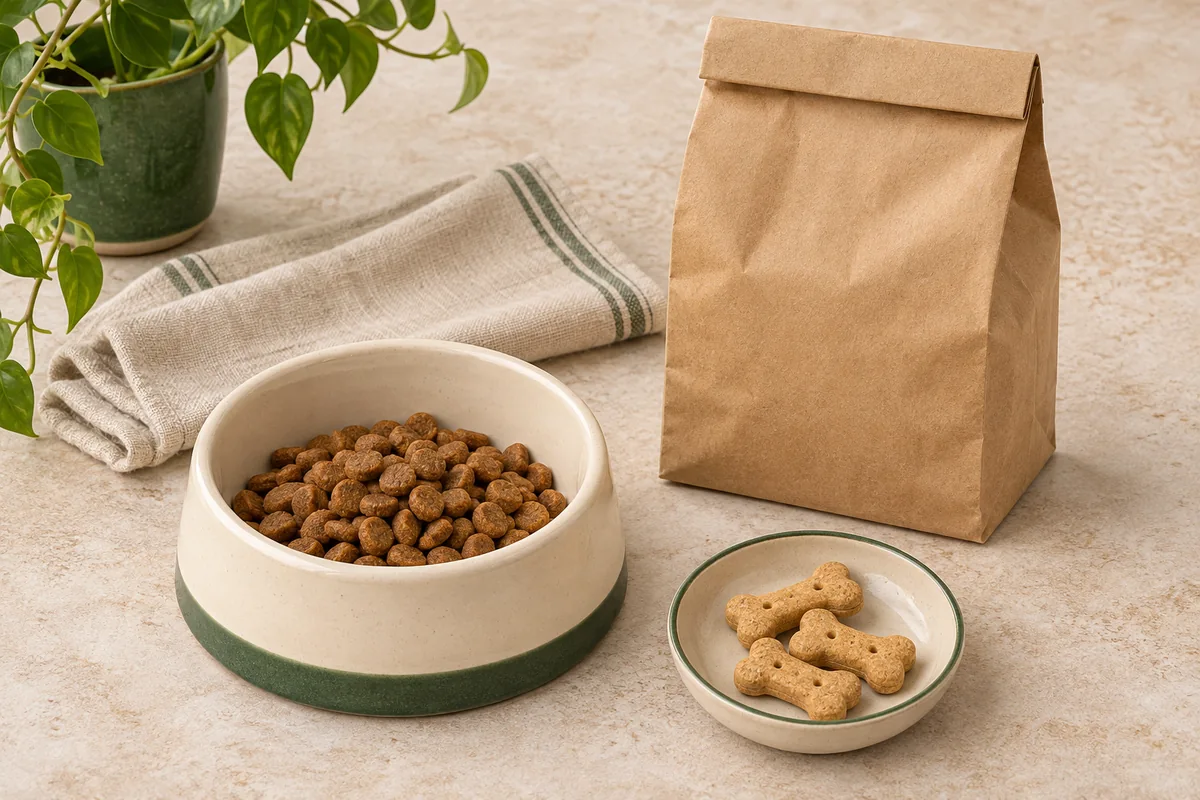
AI-generated household-planning illustration; not a product or feeding recommendation.
A useful pet plan keeps track of the food, treats and supplies you already use, so they are easier to remember during the household shop. Start with your pet's current packaged food, the quantities you buy and how often you need to restock. Grocerplan's Pet essentials routine prepares a grocery draft for review. It does not prescribe a pet diet, calculate feeding portions or buy anything automatically.
Build the list around your actual pet
Begin with the items you know you need: commercially packaged dog or cat food, appropriate treats, cat litter or other household pet supplies. Remove anything that does not apply before saving. A starter checklist is a convenience, not a recommendation that every animal needs every item. For other species or specialized supplies, add the items you have already chosen rather than treating a dog or cat list as a universal template.
Record the quantity in shopping units, such as bags, cans or packs. These are purchase amounts, not feeding amounts. The correct brand, life-stage formula and package size still need checking when you select the product at the store. If a familiar item is unavailable, review the alternative yourself; do not assume a similarly named product is an interchangeable diet.
Food and treats have different jobs. The FDA explains that a food's nutritional adequacy statement tells you whether it is intended as a complete diet. Treats and snacks generally are not a complete diet by themselves. Use the food label and your veterinarian's guidance for feeding, especially if your pet has a medical condition or needs a special diet. Human meal recipes in Grocerplan are not pet-food recipes.
Set up Pet essentials in Grocerplan
Open Pet essentials and sign in to your Grocerplan account if asked. Choose the applicable dog, cat and custom items, then edit the quantities and pack units. Give the routine a name that you will recognize later, such as your household's pet supplies, rather than leaving an ambiguous list of generic items.
Choose a weekly, every-other-week or monthly draft schedule based on your real shopping habits. A food bag and a container of litter may last different amounts of time; separate routines can be clearer than forcing everything onto the same schedule. Start with a conservative list and adjust after you see what remains at your next shop. Do not buy extra quantities solely because a reminder arrives.
New routines start paused unless you choose to prepare draft lists on the schedule. Save a paused routine if you are still deciding; resume it when you want drafts prepared. After saving, you can opt into an email when a new draft is ready, using a confirmed email address. The reminder brings you back to review that draft. It does not reserve products, choose a retailer or authorize a charge. Keep the email preference off if you would rather check the routine yourself.
Review the next draft before shopping
Check the cupboard before buying again. Remove items you still have, update quantities and consider any changes to your pet's care. A recurring list is useful precisely because you can edit it; treating yesterday's shopping choices as permanently correct defeats the purpose of a review.
When the draft looks right, choose Shop on Instacart. Select a store and confirm each product, package size, quantity and substitution there. Generic pet-food or treat searches may need manual product selection. If the match is missing or wrong, use Instacart's search or alternative-product controls rather than checking out with an unsuitable item. Availability and prices depend on the store. You complete checkout in your own Instacart account.
Keep the household budget clear
Pet supplies can belong in the same household shopping routine without being counted as human meal portions. Review their actual store prices separately when deciding how much you have left for dinners. Treat a planned budget as a target rather than a promised checkout total, and include any retailer fees shown before you pay.
For the human part of your household's menu, browse the budget recipe collection. Those recipes are for people. Keeping pet supplies and meal ingredients clearly named helps prevent accidental substitutions and makes a shared household list easier to review.
Store the products with their labels
Keep pet-food packaging information available, including the product name, lot number and best-by date. FDA guidance recommends retaining the original bag or container; that information matters if there is a recall or a product problem. Follow the label's storage instructions, refrigerate opened products when required and keep food and treats where pets cannot help themselves to the whole supply.
If your pet's needs change, edit or pause the routine before its next cycle. The schedule should follow your household's needs, not the other way around. Grocerplan helps you organize the shopping task while you remain in control of food selection, quantities and every purchase.
Sources
•
FDA: Complete and Balanced Pet Food, reviewed October 28, 2026, for nutritional adequacy and the difference between food and treats.
•
FDA: Proper Storage of Pet Food and Treats, reviewed October 28, 2026, for packaging and storage guidance.
Keep pet essentials on your list
Add the items you chose to a recurring grocery routine. Set quantities and a draft schedule, then review each prepared list before shopping. No automatic purchases.
Choose pet essentials →