← All guides
Everyday planning
Meal Prep for Beginners: Start with a Few Dinners
Start meal prep with a few dinners, one reviewed grocery list and a small prep session. Learn what to buy, what to prepare and how to handle leftovers safely.
5 min read · Grocerplan editorial team
Updated November 2, 2026
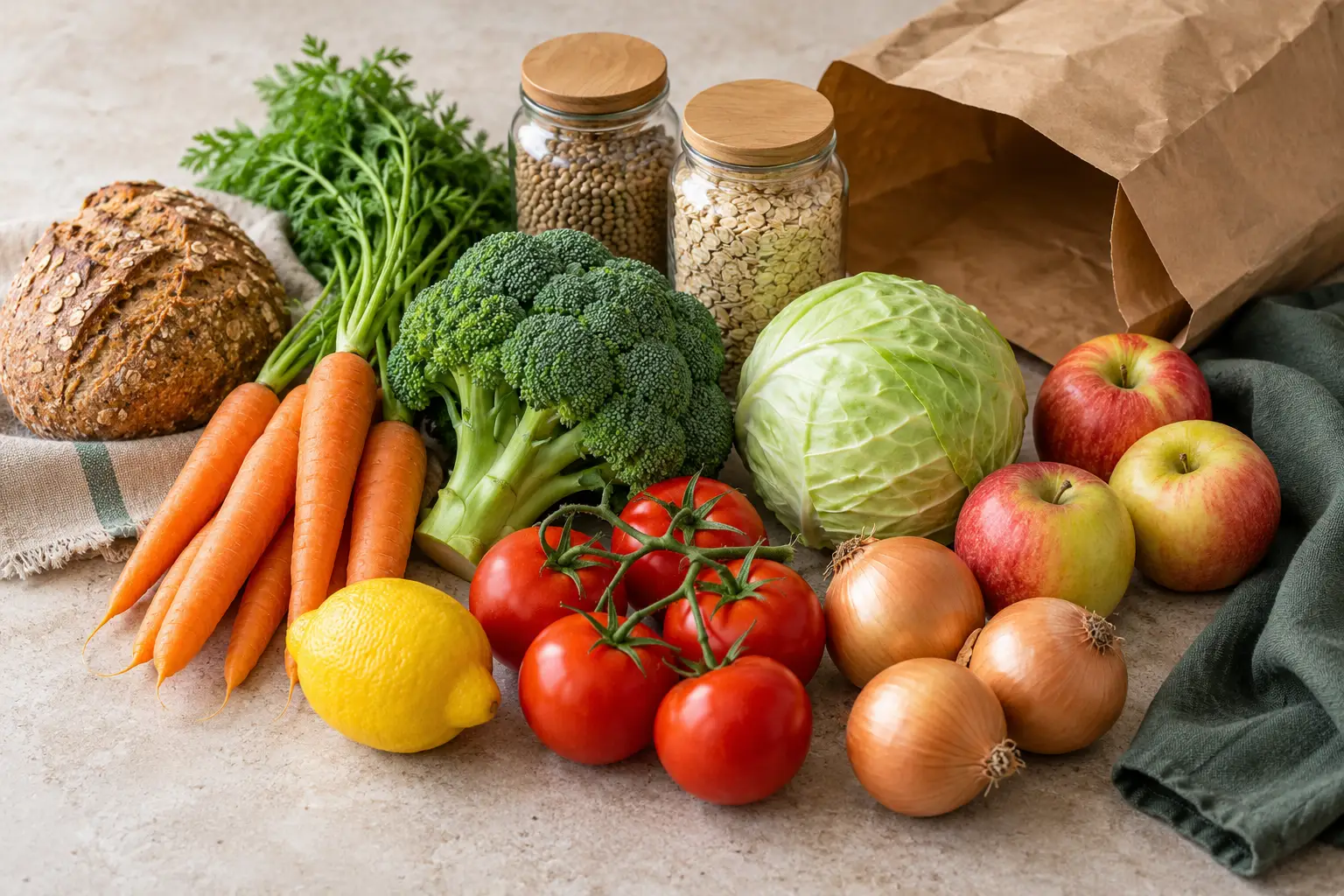
AI-generated editorial illustration; ingredients and serving sizes are illustrative.
Start with the meals you will actually eat
You do not need to cook a whole week of food to start meal prep. Choose a few dinners, check what you already have, and prepare one useful thing ahead. That might be cooking a pot of soup, washing produce or setting aside the ingredients for tomorrow. The goal is a manageable next meal, not a fridge full of identical containers.
For a concrete starting point, choose three dinners and adjust the servings. You can change the selection before creating a free account to save its grocery list. Prefer assembly meals? The no-cook guide has a separate starter menu.
Choose a small shopping window
Look at the next few days. Which evenings will you eat at home? Which need something quick? Leave room for existing leftovers, meals out or a freezer meal you already own. You can extend the plan after this first shop; filling every calendar day is not required.
Start with a familiar dinner, a second meal that uses an ingredient from it, and an easy backup. For example, the suggested three-dinner starter includes Quick Chicken Stir Fry, Kung Pao Tofu and Beef and Broccoli. Those recipes share rice and soy sauce. This is ingredient overlap, not a guarantee that every package will be used up. Check each recipe and product label for your dietary needs before choosing it.
The EPA's home food-waste guidance in Sources recommends checking the fridge, freezer and pantry first, planning for the meals you will eat at home, and including quantities on your list. Use that as a practical checklist rather than buying extra food just because you intend to get organized.
Review one grocery list before shopping
Set the cooking servings to the number of portions you intend to prepare, including any portions you deliberately want for another meal. A recipe's ingredient amount and a store's package size are different. Needing part of a bottle of sauce does not mean you can buy that fraction of a bottle.
In Grocerplan, review your saved grocery list before opening Instacart:
•
Check off anything you already have or do not need. Checked items stay off the Instacart list.
•
Read the full amount shown, especially when an ingredient combines different measurements. Do not reduce it to a guessed package count.
•
To add breakfast food, fruit or household extras to this same list, open that list and choose Add groceries. The planner's Start a separate list action creates a grocery-only list.
•
If you change saved meals, review the list's refresh notice before shopping. Keep the list you intend to use open while checking the result.
Recipe cost figures are estimates, not live store quotes. Whole packages, product choices, fees, tax and tips can change checkout cost. Keep an in-store checklist if that suits your budget or shopping habits better; printing is available under List tools.
Prepare one thing that will help tomorrow
Read the recipes before starting. Choose a task you can finish comfortably: wash the produce, measure a sauce, or cook a meal you already know. Keep uncooked meat and its utensils separate from food that will be eaten without cooking. Follow the recipe's cooking instructions and check appropriate food temperatures with a thermometer.
For batch cooking, choose a recipe from the meal-prep collection and decide when the extra portions will be eaten. You do not have to cook every recipe on your list in the same session. Keep components separate when that helps texture, and label stored food with its name and preparation date.
Cool, store and reheat leftovers safely
Food safety depends on handling and temperature, not just the day written on a container. CDC guidance in Sources says to refrigerate perishable food within 2 hours, or 1 hour when exposed to temperatures above 90°F. Divide warm food into clean, shallow containers for prompt refrigeration; keep the refrigerator at 40°F or below. Reheat leftovers to 165°F, checked with a food thermometer.
Storage time also depends on the food. The FoodSafety.gov cold-storage chart in Sources lists 3 to 4 days in the refrigerator for soups, stews and leftover cooked meat or poultry. Check the chart or product instructions for the particular item, and freeze suitable portions before their safe refrigerated storage time runs out. A week-long plan does not mean everything cooked today should sit in the refrigerator all week.
Keep what worked for your next shop
After trying the meals, keep the ones you want again and change the rest. In Grocerplan, go to Saved grocery lists, find the list you want and choose Copy groceries. Select the items you still need and create a separate list. Review quantities and what is already in your kitchen again; last week's list is a starting point, not proof that you need every item today.
An optional reminder can bring you back to review a list. It does not buy anything or reserve a shopping time. When you choose Shop on Instacart, review the matched products, store options and final total there, then complete checkout yourself. Grocerplan may earn a commission when you check out on Instacart.
Start small: choose a few dinners for your next grocery list, adjust them to your week, and prepare only what you will use.
Sources
•
EPA: Preventing Wasted Food at Home, reviewed November 1, 2026. Supports checking existing food and planning quantities for meals eaten at home. No specific savings amount is promised.
•
CDC: Preventing Food Poisoning, reviewed November 1, 2026. Supports the cooling, temperature, separation and reheating guidance above.
•
FoodSafety.gov: Cold Food Storage Chart, reviewed November 1, 2026. Gives food-specific refrigerated storage limits.
•
Grocerplan's live three-dinner starter was checked on November 1, 2026; the planner and list instructions were refreshed for the November 2 release. Product behavior is separate from food-handling guidance; recipe estimates are not measured nutritional or store-price guarantees.
Recipes for this
Plan your week free
Grocerplan turns recipes into a free 7-day plan and one grocery list, ready for Instacart checkout or a trip to any store.
Start free →