← All guides
Shop smarter
Reuse Ingredients Across Meals Without Repeating Every Dinner
Choose a few meals that share groceries, check recipe amounts against package sizes, and build a shorter shopping list with a clear use for what is left.
5 min read · Grocerplan editorial team
Updated November 3, 2026
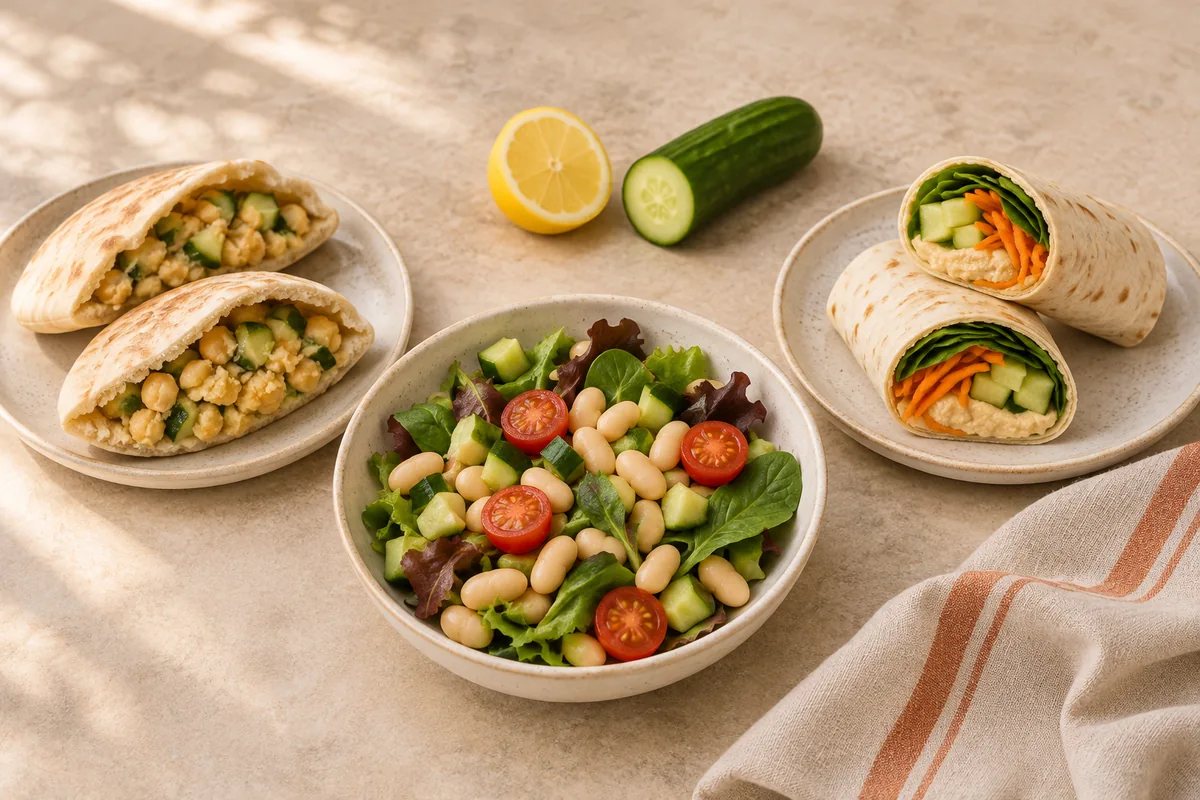
AI-generated illustration of the no-cook meal ideas; quantities are illustrative.
A shorter grocery list starts while you are choosing meals. Pick one dinner you want, look at its ingredients, and choose another meal that uses something you would otherwise have left over. You can keep variety in the finished meals while giving a bag, bunch or bottle more than one useful job.
The aim is not the fewest possible ingredients. It is a manageable shop with less food bought for a single forgotten spoonful. This guide walks through two Grocerplan starter examples and the checks that make ingredient reuse practical.
Start with one meal you want to make
Choose a meal that fits your time, equipment and preferences. Then read the ingredient list before filling the rest of your plan. Which groceries will you buy in amounts larger than that recipe uses? Which are already in your kitchen? Which would be easy to use again?
Fresh herbs, opened vegetables, sauces and large packages can be useful places to look. Do not invent extra meals merely to use an ingredient that nobody wants. Sometimes choosing a simpler first recipe or a smaller package is the better decision.
Make a short note beside the ingredient: “another dinner,” “lunch,” or “already have.” If you cannot describe a likely use, reconsider whether it belongs in this shop. That is a planning prompt, not a reason to keep food that has not been stored safely.
Try a cooked three-dinner example
Grocerplan's three-dinner starter combines Quick Chicken Stir Fry, Kung Pao Tofu and Beef and Broccoli. All three use rice and soy sauce. At the starter's two servings, the chicken dish and tofu dish each call for half a red bell pepper. Those amounts can be reviewed together instead of treating them as unrelated purchases.
Open the three-dinner selection to inspect the meals and change the servings. You can remove meals or choose an available alternative before saving. The overlap described here applies to the suggested set; after changing a meal, check the ingredients again.
This example does not mean you should buy one fixed product for every household. The right rice package, sauce bottle and pepper depend on what you own, the amount you need and what is sold at your store. Product labels also matter: a similarly named sauce may have different ingredients or allergens.
Or start with three meals that need no heat
The no-cook starter contains Chickpea Crunch Pitas, White Bean Cucumber Salad and Hummus Crunch Wraps. All three use cucumber, while the pitas and salad share lemon and olive oil. That overlap offers a simple way to plan around fresh groceries without cooking a batch of one dish.
Read the no-cook meal plan for the exact ingredient quantities and assembly instructions. These meals still require basic preparation and refrigeration. Frozen or raw ingredients that need cooking are not interchangeable with ready-to-eat products just because their names sound similar.
For a different cooked meal, browse the quick recipe collection and look for ingredients that connect with your first choice. You do not need to use both examples in one week. Choose the one that fits how you want to prepare food, or keep only the meals you want from a starter. Fewer suitable meals are more useful than a larger menu you will not make.
Combine quantities before choosing packages
Use the selected servings to calculate how much the meals require together. Then subtract the usable amount you already have. Finally, compare the remaining amount with the package sizes at your store. Recipe amounts and packages are different steps in the same decision.
For the red-pepper example, two half-pepper amounts total one pepper before any household adjustments. For ingredients measured in cups or tablespoons, do not assume that the same number describes a bag, jar or can. Check the package contents and the recipe's preparation basis, such as cooked versus uncooked.
USDA's MyPlate budget guidance recommends using unit prices when comparing similar products. Still consider the total amount you need and can store. A larger package with a lower unit price does not help if its extra contents have no realistic use.
Decide what to do with the remainder
There are several different kinds of remainder, and each needs a different decision. An unopened pantry item can wait for another suitable meal. An opened chilled product follows its label's storage instructions. Cooked leftovers need a safe storage plan, not simply another square on a calendar.
Keep the plan visible in a way you will actually check. A small note beside the saved meal or on your kitchen list can be enough: use the remaining cucumber in tomorrow's wrap, or keep the unopened pantry item for a later shop. Do not treat a planned use as evidence that the food is still safe.
Keep the refrigerator at or below 40°F, and refrigerate perishable foods promptly. FDA advises against leaving foods that require refrigeration out for more than two hours, or one hour when the temperature is above 90°F. Follow product instructions and discard food when safe handling is uncertain.
Save one list and review the real products
Once you like the meal selection, save its groceries to one list. Check the kitchen, adjust quantities and add any other ingredients you need. When you shop through Instacart, review the matched products and packages before adding them to the cart. You still complete checkout there yourself.
After the meals, note which overlap helped and which ingredient remained unused. Keep the useful pairing for next time. You are building a small collection of meals that work together, rather than trying to solve every future dinner in one sitting.
For the next step, use the budget-planning guide to compare the full basket with what you intend to spend. Ingredient reuse can make planning easier, but it is not a guaranteed savings calculation.
Sources
•
Grocerplan's current starter recipes supply the named meal combinations and ingredient overlap. The shared-pepper example uses the two-serving starter amounts; no live product prices are implied.
•
USDA MyPlate: Eat Healthy on a Budget, reviewed November 3, 2026, for comparing similar products by unit price.
•
FDA: Are You Storing Food Safely?, reviewed November 3, 2026, for refrigeration and time-temperature guidance.
Pick your dinners before you sign up
Choose a starter menu, adjust meals and servings, then create a free account to save your selection as one grocery list. Review it before shopping on Instacart or at any store.
Choose a starter plan →
Or create a free account